
The Future Library
A wild bet on the future of art and nature
This has been a busy week, and late in the day on Thursday it’s becoming clear that a full entry of Facit Saltus is not in the cards for me this week. In place of an essay though, I want to share a project I’ve been curious about for while, in hopes it’ll also occupy your heart.
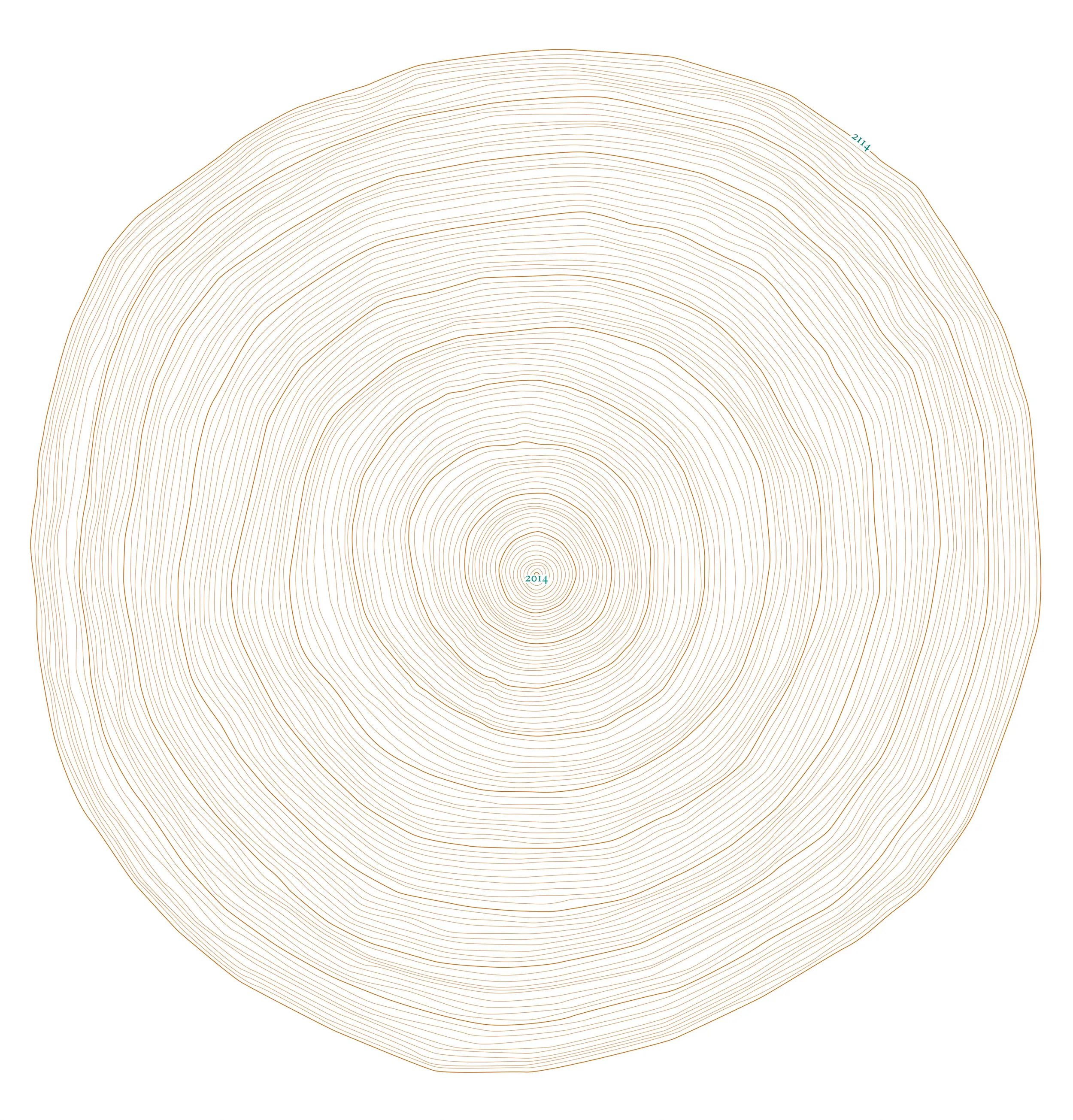
In 2014, the Scottish artist Katie Patterson launched The Future Library, an extended art project through which she is growing two flourishing forests: one of trees and another of words. In that year, Patterson planted 1,000 Norwegian spruce trees in an area north of Oslo, Norway, called Nordmarka. The forest will continue to grow for a century, during which time the project will collect one new manuscript per year, each work written by one of humanity’s greatest wordsmiths. Each submitted manuscript will be an original work that will go unread until 2114, when the full anthology of 100 manuscripts will be printed on paper crafted from the trees Patterson planted. The spruce trees, and the written works that are set to be printed on them, are a gift to a future beyond a time when most of us will still be living. The project is an act of faith in those who come after us to value and care for the art we humans create and the survival of the more-than-human-world that buttresses our ability to create it.
Beautifully, perfectly, the first author to contribute a manuscript for the Future Library was Margaret Atwood, whose Scribbler Moon will not be readable until the second decade of the 22nd century. Upon submitting her work, Atwood mused, ““How strange it is to think of my own voice — silent by then for a long time— suddenly being awakened, after a hundred years. What is the first thing that voice will say, as a not-yet-embodied hand draws it out of its container and opens it to the first page?”
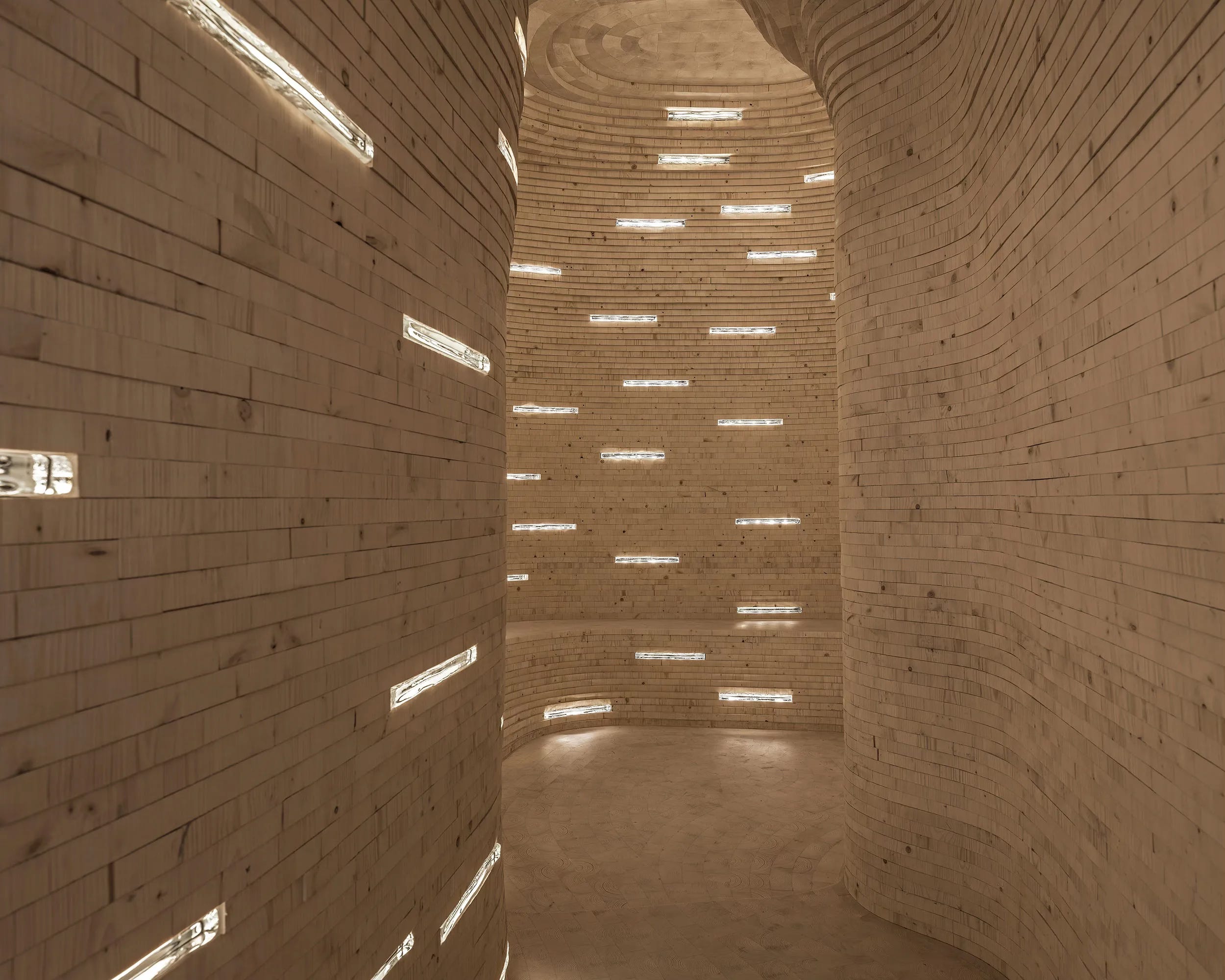
The manuscripts are being collected in a special “Silent Room” created for the project in the Deichman Bjorvika Library in the center of Oslo. The room is lined with curved walls made up of pieces of wood from Nordmarka forest, interspersed with 100 illuminated glass drawers that will house these works as they arrive across the century. Visitors can enter the space, and can view which drawers hold their sleeping literary contents already and which await filling, but visitors cannot open the drawers or handle the works.
This project has held my imagination since I stumbled upon it maybe a year and a half ago, as it has all the hallmark things I love: a nature angle, an art angle, a future angle, immersive spaces, an element of whimsy and cross-species and cross-temporal collaboration. I’d sort of forgotten about the project, however, it’s location, the artist, the overall thrust of the idea, as so often happens with things that are really cool that you learn about and then slip out of your memory.
BUT: two serendipitous things happened independently of one another recently, suggesting to me that the universe wants me to attend to the Future Library more closely. First, the project just popped back into my consciousness one morning before I had opened my eyes, in that space between dreaming and waking, nudging me to rediscover it. This happened at the same time that I’ve been doing some research about a trip to Norway my mom and I are taking in June. So today I had the lovely experience of using a spare 10 minutes I had before a meeting began to google things like “tree library art project 100 years?” and come back in connection with the Future Library. And then learn:
HOLY SHIT, THIS IS IN OSLO.
Well, you can bet your ass I’ll be dragging my mom to the Silent Room, come June, and you’ll be hearing about it in these pages.
Do yourself a favor and explore the Future Library, and I’ll see you next week!
This is so cool and another amazing example of Cathedral Thinking and being a good ancestor. I'm sure you know of the 10,000 year clock that the Long Now Foundation has created in West Texas. https://longnow.org/clock/. Maybe we should visit it together? But I absolutely love this library and the natural beauty of it and I love thinking about the moment when the first people finally get to read the books!